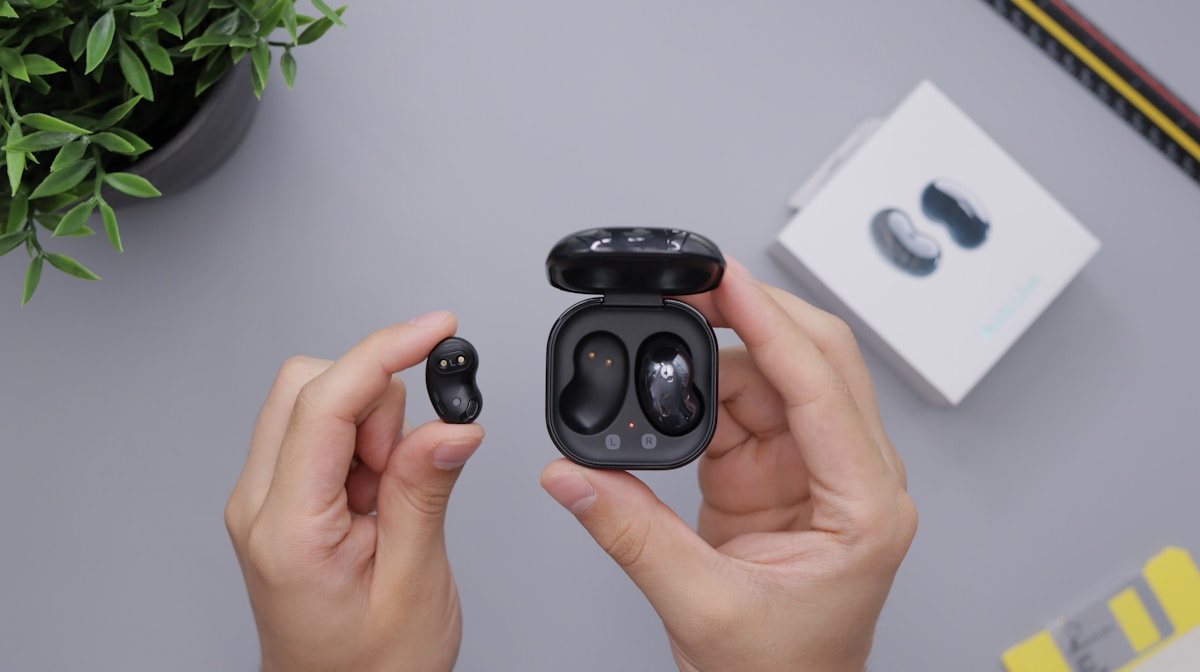
Best Wireless Earbuds Under $50 in 2026: How Chinese Audio Brands Won the Budget Tier
For years, “under $50” meant a compromise: weak bass, no noise cancellation, a mic your caller hated. In 2026 that ceiling is gone. Shenzhen audio brands — SoundPEATS, QCY, Moondrop, Haylou — now ship hybrid ANC, Bluetooth 5.3, multi-point pairing, and LHDC codecs that were flagship territory three years ago. This guide is the honest version of what your money gets.
The core viewpoint: buy the codec and the fit, not the logo
At this price the differentiator is rarely the driver. It’s (1) which codec the buds actually negotiate, and (2) whether they physically seal your ears. A $35 bud with a good seal and AAC/LHDC will beat a $120 bud that doesn’t fit you. So judge on:
- ANC type — hybrid (feed-forward + feedback) cancels more than single-mic; some $40 buds now have it.
- Codec — AAC for iPhone, LHDC/LC3 for Android hi-res; SBC-only is the budget tell.
- Multi-point — two devices at once; a genuine quality-of-life win now common under $50.
- App EQ — SoundPEATS and QCY both ship tunable apps; this is where cheap buds punch up.
The fit problem nobody talks about
The single biggest determinant of how a pair of budget earbuds sounds is not the driver and not the codec. It is whether the nozzle seals your ear canal.
A proper seal does three things at once. It blocks outside noise passively, which means your ANC has less work to do. It preserves bass, because low frequencies escape through any gap. And it stabilizes the bud so it does not shift when you chew or walk. A $30 bud with a good seal will sound fuller and isolate better than a $150 bud with a bad one, and no amount of app EQ fixes a leaky fit.
Practical fit guidance:
- Try all three tip sizes, and try them for twenty minutes each. The correct size often feels slightly too large at first. If a tip slides out when you talk, it is too small.
- Foam tips are a genuine upgrade. A set of third-party memory foam tips costs $8 to $12 and often transforms the bass response of a budget bud.
- Nozzle length matters more than shell size. A longer nozzle reaches deeper into the canal and seals more reliably. This is why designs like the Moondrop Space Travel seal so well despite a small shell.
- If no size seals, the bud is wrong for you. Return it rather than fighting it. Some ear shapes simply do not suit some shells.
That last point is the reason “best earbuds” lists are only ever a starting point. The bud that fits you beats the bud that measures best.
What $50 actually buys in 2026
| Bud | Strength | Best for |
|---|---|---|
| SoundPEATS Engine 4 / Free2 Classic | Balanced sound, real app EQ | The safe default; lowest risk |
| QCY HT05 (ANC) / T13 | Cheapest credible hybrid ANC | Tight budget, commute |
| Moondrop Space Travel | Best raw sound under $40, DSP ANC | Audiophile-lite, travel |
| Haylou MoriPods / PurFree | Comfort, open-ear option | All-day wear, calls |
Codecs explained without the marketing
Codec talk gets muddy fast, so here is the practical version.
SBC is the fallback that every Bluetooth audio device supports. It is fine, it is not good, and a listing that only mentions SBC is telling you the product was not designed with sound quality as a priority.
AAC is what your iPhone uses regardless of what the buds support. On iPhone, AAC is effectively the ceiling, which is why an expensive bud with LDAC does not sound meaningfully better on an iPhone than a well-tuned AAC bud. If you are on iPhone, do not pay extra for a hi-res codec you cannot use.
LHDC and LDAC are the higher-bitrate Android codecs. They matter if you subscribe to a hi-res streaming tier and your phone supports them. On a $35 bud over a noisy commute, the difference between AAC and LHDC is far smaller than the difference a proper seal makes.
LC3 is the newer low-complexity codec tied to Bluetooth LE Audio. It is more power-efficient and more resilient to interference at low bitrates, which matters for connection stability more than for fidelity. Support is still inconsistent across phones in 2026.
The honest summary: match the codec to your phone, not to the spec sheet. iPhone users should ignore LDAC entirely and spend the savings on better tips.
ANC at this price: what it does and does not do
Budget ANC is genuinely useful and genuinely limited, and both facts matter.
What it handles well: the constant low-frequency drone of a bus engine, a train at speed, an airplane cabin, a fan, a refrigerator hum. That is where hybrid ANC earns its place, and a $40 bud with hybrid ANC will meaningfully reduce that noise floor.
What it handles poorly: speech, keyboard clatter, a barking dog, sudden high-frequency sounds. That is simply physics — low-frequency noise is easier to cancel because the wavelength is long enough for the feedback mic to sample and invert it.
A specific caution about budget ANC: aggressive cancellation can create a faint pressure sensation in your ears that some people find uncomfortable. If you have never used ANC before, buy from a seller with a return policy rather than committing. And never rely on ANC to replace hearing protection — a budget bud is not a substitute for proper ear defenders at a concert or on a job site.
Chinese brands worth a real look
This is the clearest “China leads the budget tier” story in audio:
- SoundPEATS — the consistent pick; tuning is mature, apps work.
- QCY — owns the “I have $25” segment; ANC that shouldn’t exist at the price.
- Moondrop — the one audiophiles respect; Space Travel redefined the floor.
- Haylou — comfort and open-ear for people who hate in-ear seals.
These aren’t no-name; they’re the OEMs the legacy brands quietly source from. Buying direct just drops the markup.
Honest caveats
- Wind/mic — call quality in wind is still the weak spot vs $200 flagships; don’t expect boardroom clarity.
- Gaming latency — turn on game mode or use a wired set; Bluetooth sleeps.
- ANC depth — good for hum/trains, not a jet-engine silencer.
Add two more that rarely make it into reviews. Battery degradation is real: a $40 bud rated for 6 hours will often be at 4 hours after eighteen months of daily cycling, and the case battery ages too. App quality varies wildly — some companion apps ask for excessive permissions and some have not been updated in two years. If an app requires location access to function, that is a red flag worth taking seriously.
Who each bud is for
The commuter on a bus or train. QCY HT05. This is the use case budget ANC was built for, and the price makes a lost or broken bud a shrug rather than a disaster.
The iPhone user who wants the safe pick. SoundPEATS Free2 Classic. AAC is your ceiling anyway, and the app EQ is genuinely useful for taming an aggressive tuning.
The listener who cares about music first. Moondrop Space Travel. The tuning is the best under $40 by a clear margin, even if the app is minimal.
The all-day wearer who hates the plugged-ear feeling. Haylou open-ear options. You lose isolation and gain the ability to hear traffic and coworkers.
The gamer. None of these. Buy a wired set or a dedicated 2.4GHz dongle solution, because Bluetooth latency is a hardware constraint no firmware update fixes.
The person with one ear that never seals. Consider open-ear or bone-conduction designs instead of fighting in-ear fit.
Bottom line
Spend $30–$50 on SoundPEATS, QCY, or Moondrop and you get roughly 80% of a $150 flagship for a third of the price. The remaining 20% is mic polish and brand cachet you won’t miss on a commute. Save the rest.
The one upgrade I would actually recommend spending on: a set of memory foam tips. Twelve dollars of foam does more for a $35 bud than thirty dollars of additional bud budget usually does.
Disclosure: if you order through our link, TechMinds may earn a small commission at no extra cost to you.