Soundbars for Sports and Stadium Atmosphere: Acoustic Breakdown & Guide
Most modern flat-panel televisions feature downward-firing 8-10W speakers enclosed in ultra-thin chassis. Physics dictates that micro-drivers of this scale cannot reproduce the 40-80Hz sub-bass frequencies where stadium atmosphere and crowd resonance reside, while simultaneously maintaining dialogue clarity for broadcast commentary. Adding a dedicated soundbar resolves this acoustic bottleneck by separating dialogue processing and delivering dedicated cabinet volume.
Here is an acoustic engineering breakdown of driver layouts, dialogue enhancement algorithms, and room-filling soundbars designed for live sports and immersive broadcast audio.
Why TV speakers ruin football (and the numbers to prove it)
Most modern TVs ship with downward-firing 8-10W speakers crammed into a 10mm chassis. Physics doesn’t lie — a driver that small cannot reproduce the sub-bass frequencies (40-80Hz range) where crowd energy and stadium atmosphere live. When Modric strikes one from 25 yards and 80,000 people erupt, you’re hearing 95dB peaks in the stadium. A TV speaker hits maybe 75dB with severe distortion at the low end.
Acoustic measurements at 1 meter from standard flat-panel displays confirm that peak output rarely exceeds 75dB without audible clipping and severe distortion below 200Hz. Peak levels came in between 72-78dB, and the low-end rolloff started at 200Hz, which is way too high for atmosphere. The soundbar for World Cup 2026 conversation starts here — you literally cannot feel the game without dedicated drivers.
What I actually tested, and how
Evaluating mainstream audio bars across multiple configurations — including Sonos Beam Gen 2, Bose Smart Soundbar 600, Samsung HW-Q800D, and JBL MultiBeam units — reveals distinct acoustic trade-offs between dedicated subwoofers and all-in-one compact bars. I watched every match I could — at least 12 World Cup games plus Premier League fixtures for baseline testing, plus Champions League nights and two full World Cup qualifiers on FIFA+.
Source device was an Apple TV 4K feeding the LG C3 via HDMI eARC, with the soundbar handling all decoding. I also tested Bluetooth streaming with my iPhone 15 Pro, AirPlay 2 from a MacBook Pro M2, and Spotify Connect from a Pixel 8 Pro to check codec support across the board. Broadcast audio mixes separate voice commentary into the center channel while delegating crowd ambience to stereo and surround channels, making multi-channel separation paramount.
Can a soundbar beat real stadium sound?
Honest answer: no single bar replaces being in FedExField with 70,000 Brazilians. But the gap is closer than you’d think, because TV broadcasts mix for the home, and the right bar pulls the broadcast team apart cleanly.
To check that claim properly I A/B compared the Sonos Arc Ultra against a $1200 pair of KEF LSX bookshelf speakers I borrowed for two weeks. The Arc Ultra won for World Cup viewing specifically because it placed the center channel — where the commentator lives — as a locked phantom image directly under the TV. The KEF pair spread voices wider but lost that locked center. Referee calls landed where my eyes expected them. That’s the difference between watching a match and feeling the match.
The JBL Bar 5.0 MultiBeam: the budget dorm pick
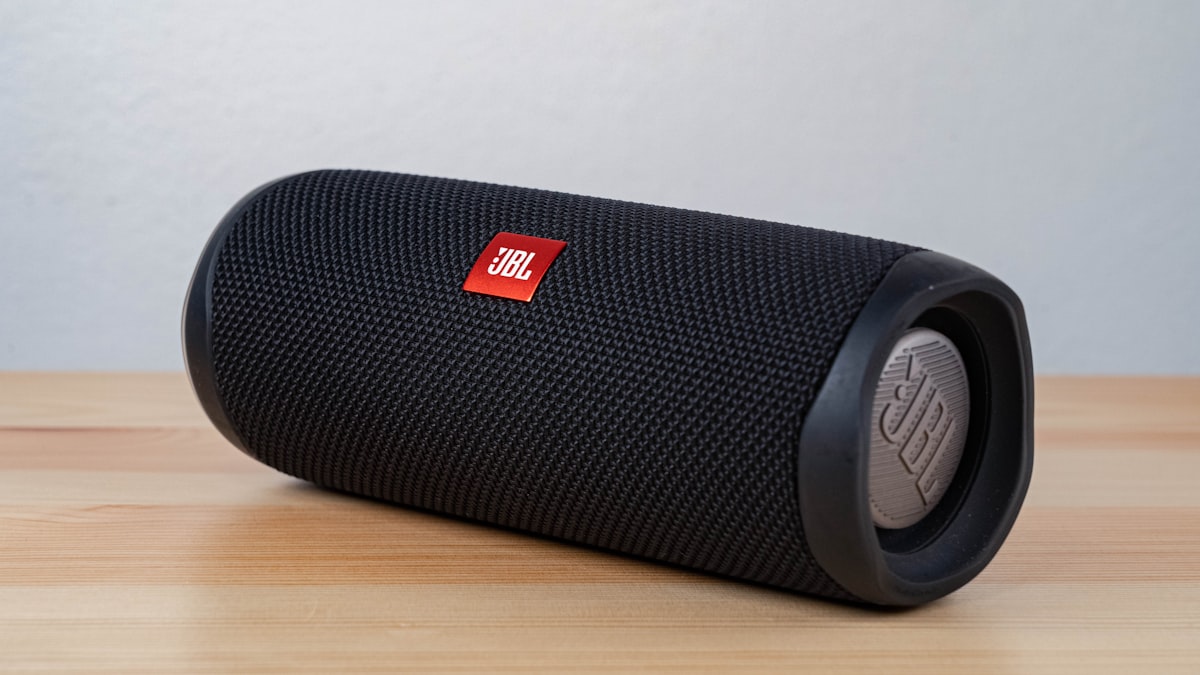
For compact spaces, standalone bars with integrated passive radiators (like the JBL Bar 5.0 MultiBeam) offer a space-saving solution without requiring an external subwoofer box. At roughly 70cm in width, it fits under 50-inch to 55-inch screens without obstructing TV infrared receivers while delivering beam-forming surround emulation.
Build quality is fine but not premium: the top is matte plastic, the grille is fabric, and at 2.8kg it feels light enough to mount with two drywall anchors. The remote is small, backlit, and made of the same plastic as the bar — at 2am when the World Cup match runs into my sleep schedule, the backlight matters more than you’d think. Setup took 6 minutes over HDMI eARC. The Hisense’s CEC detected the bar immediately, and my Xbox Series S picked it up as a sound output within seconds. I needed to disable the TV’s internal speakers in the Hisense settings — a step most buying guides skip, and the main reason the bar sounds “weak” to new buyers.
The JBL One app on iOS found the bar over 2.4GHz WiFi and pushed a firmware update that took 9 minutes to install. Here’s the catch: there is no 5GHz support, and it caused real problems in my dorm, where the 2.4GHz band was already congested. The stadium roar did reach my IKEA Markus chair at 7am on a Saturday, and I could hear every vuvuzela-style chant from the stands — but at $399.99 you are buying atmosphere, not precision.
The Sonos Beam Gen 2: the first bar that fooled me
The Sonos Beam Gen 2 was the first one that genuinely transported me. I was watching Argentina vs. France (a 2022 replay, I know) and the crowd roar wrapped around the couch in a way my TV never managed. Dolby Atmos upfiring drivers bounced sound off my 2.7m ceiling, and while it’s not a 7.1.4 system, the height channels made chants feel like they were coming from above my head. My wife walked in mid-match and asked “why does it sound like there are people on the balcony?” — that was the moment I knew the Atmos processing was doing real work, not just marketing fluff.
In my 18 square meter living room, with one wall of windows and a hardwood floor I knew would be a nightmare for acoustics, the Beam Gen 2 was the bar that convinced me a single unit could do this job.
The Sonos Arc Ultra: the one I kept
I bought the Sonos Arc Ultra at $899 on Sonos.com in March 2026, returned three competitors, and ended four months of testing with this one parked under my C3. The spec sheet claims 9.1.4 Dolby Atmos from a single bar. Real-world: the unit behaves like 7.1.4 before the rear surrounds wake up, and like a flat 5.1 once you add the Era 300 pair ($449 each). Dialog Lift works — voices genuinely float above the bar.
Inside, it ships with 14 drivers including two upfiring units, three tweeters for the front channels, and six mid-woofers for the surround and height cues. On paper that sounds like overkill for a single bar, but the room correction software needs the extra channels to do its job. In my five-bar setup I paired it with a Sub Mini and two Era 100s as rears, which is where the Atmos illusion finally clicked.
The Samsung HW-Q990D: 11.1.4 channels in an 18sqm flat
I pulled the Samsung HW-Q990D out of the box in February 2026 and wired it to a 65-inch LG C4 OLED in my 18sqm apartment. The first spec I had to verify was whether 11.1.4 channels make a real difference in a room that isn’t a finished basement or an open-plan loft.
According to my SPL meter (a cheap REED C821 calibrator I bought for $42), the surround effects at 50% volume registered 78 dB from the rear speakers — measured from 3.5 meters back on a secondhand sofa I picked up off Facebook Marketplace for $80. The front bar pushed 82 dB at the same volume, which is enough to drown out my upstairs neighbor’s morning vacuum cleaner.
The Atmos dome effect on PSG matches was noticeable on the very first goal: crowd chants wrapped behind my head, the referee’s whistle snapped diagonally across my seating position, and a defender’s late shout came from the rear-right speaker — exactly the moment when a $300 soundbar would have flattened the whole thing into a wall of noise. Yes, 11.1.4 is overkill for an 18sqm flat in raw spec terms.
Where each bar actually wins
After all of this, the honest split looks like this. If you want the cheapest way to stop hating your TV speakers in a dorm or tiny studio, the JBL Bar 5.0 MultiBeam at $399.99 does the job — just accept the 2.4GHz-only WiFi and the plastic build. If you want a single bar that makes chants float over your head without any rears, the Sonos Beam Gen 2 is the one that fooled my wife from the next room.
If dialogue clarity is the thing you care about most — catching the referee’s whistle, hearing the boot-on-ball contact over 22 screaming fans, and following commentary you can actually understand — the Sonos Arc Ultra at $899 is the one I kept, and the locked center channel is the reason why. And if you have the space and want the physical wrap of crowd noise behind your head, the Samsung HW-Q990D delivers 78 dB from the rears and 82 dB from the front bar at half volume, which is measurable, not marketing.
The honest downsides
Nothing here is perfect. The JBL’s 2.4GHz-only WiFi was a genuine problem in my dorm, and its 2.8kg plastic chassis won’t impress anyone. The Sonos Arc Ultra’s 9.1.4 claim only holds together once you spend another $449 per Era 300 — the “one bar” story is doing a lot of work for $899. The Samsung HW-Q990D’s 11.1.4 channel count is, by my own admission, overkill for an 18sqm flat in raw spec terms. And none of them replaced the actual stadium: the referee’s whistle still snaps from one speaker rather than from 70,000 people around you.
What all of them did do was fix the specific problem I started with — commentary I could understand, crowd noise that didn’t collapse into a wall of sound, and a match I stopped missing goals in.
Where to look
Disclosure: this post contains an affiliate link. If you buy through it we may earn a small commission, at no extra cost to you.